
If you haven’t read Part I, we highly recommend starting there:
👉 Part I: Understanding Periodontal Disease and Professional Dental Care
Recap: Why Dental Health Matters So Much
In the first part of our Dental Health Month series, we explored why dental health is a core component of your pet’s overall well-being. We discussed what periodontal disease is, how it silently affects up to 80% of dogs and cats by age three, and the consequences—pain, tooth loss, organ damage, and diminished quality of life.
We also covered what actually happens during a COHAT (Comprehensive Oral Health Assessment and Treatment) in a modern veterinary clinic, and explained why “anesthetic-free” dentals miss the mark (and can even be dangerous). We finished by outlining the signs of dental problems and the critical importance of early detection and veterinary oral health care.
If you missed Part I, click here to read it—we promise it’s worth your time and will provide helpful background for today’s article!
Why Home Dental Care Makes a Difference
A healthy mouth is built through small, consistent daily habits, and what happens between veterinary visits is critical to preventing disease. Daily home dental care can reduce plaque, slow tartar formation, and lessen the severity of periodontal disease over time. Regular plaque removal through brushing or proven dental products helps maintain fresh breath and keeps pets more comfortable for longer. For example, controlled research has demonstrated that dogs receiving daily home care can experience significantly lower levels of plaque and gingivitis compared to those without any home care.
The Plaque Cycle: Why Every Day Counts
Plaque is a soft film of bacteria and food debris that begins forming on your pet’s teeth within hours after eating. If it isn’t removed, it starts to harden into tartar in as little as 24 to 72 hours. Once tartar is present, it traps bacteria against the tooth, increases gum inflammation, and eventually contributes to bone loss, loose teeth, and pain. As plaque matures, bacteria also slip below the gumline, where they trigger inflammation and damage the tissues that support the tooth.
What happens over time:
- Within 24 hours: Plaque begins forming again after brushing or a COHAT.
- 48–72 hours: Plaque starts to mineralize into tartar.
- After tartar forms: Only veterinary dental therapy can fully remove it.
This is why veterinarians encourage simple, consistent home care. Plaque can harden quickly, and once it does, prevention becomes much harder. Keeping up with daily care is one of the most effective ways to protect your pet’s mouth, no matter which tools you choose.
What this means for you: Daily care is the goal, but it doesn’t have to be perfect to be powerful. Even starting a few days a week and building from there can meaningfully slow this cycle and support your pet’s comfort and long‑term dental health.
Active Home Care: When You’re Hands On
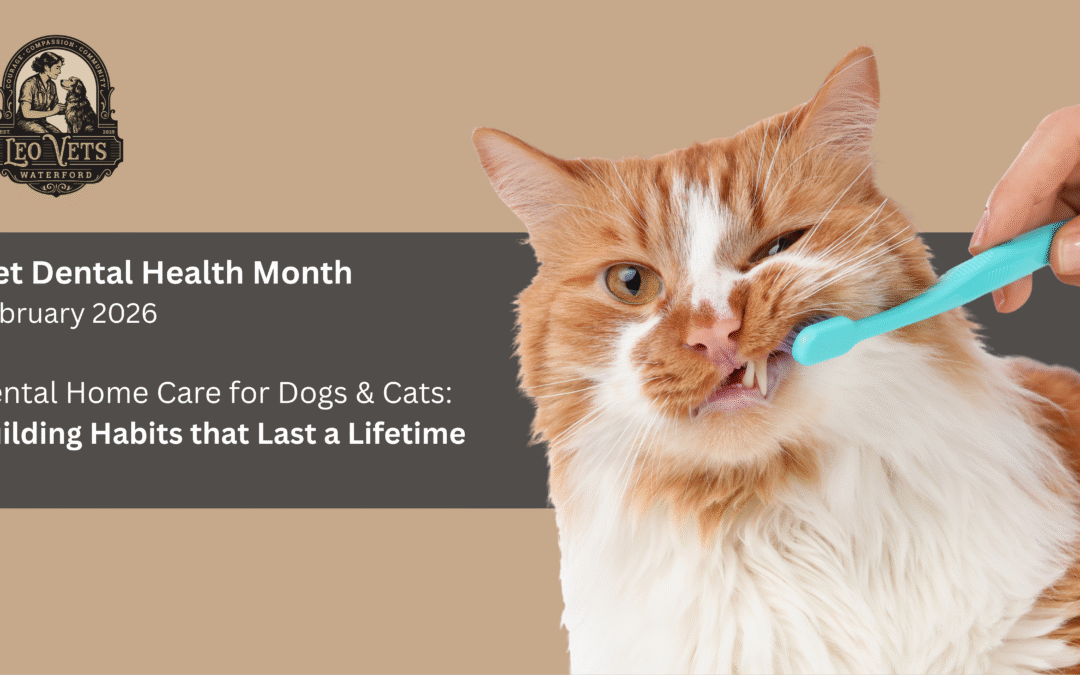
Active home care means you’re directly involved in managing your pet’s oral hygiene. The classic example is daily toothbrushing, which works by mechanically disrupting and removing soft plaque before it mineralizes.
Other options in the active category include dental wipes and oral rinses. These are great for pets who don’t initially tolerate a brush, or as supplements to brushing for high-risk cases.
If you’d like hands-on guidance, our team offers in-clinic demos for brushing, wipes, and rinses—just ask us anytime.
Why daily is essential: Because of the rapid plaque cycle, we recommend brushing once per day if possible. Research has shown (see above) that daily action makes a measurable difference in outcomes.
Toothbrushing tips:
• Use a soft-bristled pet toothbrush or finger brush, or a children’s (toddler) toothbrush for smaller mouths.
• Always use a pet-specific toothpaste. Never use human toothpaste (fluoride, foaming agents)—pet-friendly toothpastes come in flavours like chicken, seafood, beef, and vanilla mint. C.E.T. by Virbac is a favourite in our clinic.
- Introduce brushing gradually and make it fun—reward with treats, attention, or playtime after.
- Make it fun: Many pets respond well when brushing becomes a predictable little ritual. Try pairing it with something your pet already loves—like a favourite chew afterward, a short play session, or a cuddle on the couch. Keeping the tone light and positive helps your pet see brushing as a normal, rewarding part of the day.Rinses can be gently applied to the gums with a finger or squirted inside the cheek.
Some toothbrushing resources:
- C.E.T. Home Dental Care YouTube Playlist
- Fear Free (article) – Make Pet Tooth Brushing a Habit
- Fear Free (video) – Creating a Fear free Toothbrushing Environment
What Does “Enzymatic” Mean?
Enzymatic pet toothpastes and chews mimic natural salivary enzymes (the “peroxidase” system found in all mammals, including dogs, cats, and people). These enzymes break down and help neutralize bacteria on the teeth, boosting the mechanical cleaning action of brushing or chewing even further. C.E.T.’s toothpaste and chews both use this science.
Chlorhexidine-based dental wipes and rinses:
- Dental wipes are easy to use and helpful for pets just learning hygiene.
- Rinses can be gently applied to the gums with a finger or squirted inside the cheek.
How Chlorhexidine Works
Chlorhexidine is a safe, effective antiseptic that binds to oral tissues and tooth surfaces. It disrupts bacterial cell walls, reducing overall plaque accumulation and providing extended protection after application. We recommend products with chlorhexidine in wipes, rinses, and select chews for pets at higher risk or as an add-on to your routine.
Passive Home Care: When Your Pet Does the Work
Passive tools work “behind the scenes”—your pet does the work just by chewing, eating, or drinking. These are excellent ways to support mouth health, especially for pets who don’t tolerate brushing or as an addition to active care.
Dental Diets
Dental diets do more than just “crunch.” They’re designed to clean the tooth surface as your pet chews.
- Larger kibble size encourages the tooth to sink in rather than shatter the kibble.
- A special fibre matrix scrubs the tooth surface — even near the gumline.
- Some formulas include ingredients that slow tartar formation.
- Dental diets can be fed as a full meal, treats, or training kibble.
- Cats on canned food can still benefit from a few dental kibbles daily.
Our favourites: Hill’s t/d, Royal Canin Dental, and Purina DH. We’re happy to help you choose the right one.
Chews, Toys & Water Additives
- Dental chews: Look for VOHC-approved products with proven plaque and/or tartar control. Chews can be plant-based (like C.E.T. VeggieDent) or specially processed rawhide from trusted brands.
- Rubber toys: KONG Dental toys and similar provide gentle scrubbing; add a smear of pet toothpaste for extra benefit.
- Water additives: Easy to use and usually flavourless — though some picky cats may disagree.
Safety note: Avoid very hard items like antlers, bones, hooves, or hard nylon toys. If it’s harder than your pet’s tooth, it can break a tooth.
The VOHC Seal – What it Means
The Veterinary Oral Health Council (VOHC) is an independent group of veterinary dental specialists that evaluates whether a product’s submitted research meets their standards for reducing plaque and/or tartar. VOHC does not test or review products themselves; companies conduct their own studies and submit the data for VOHC assessment. Products that meet VOHC’s criteria are awarded the VOHC Seal for plaque control, tartar control, or both.
- When shopping for dental chews, diets, rinses, or water additives, look for the VOHC Seal to know that a product has evidence behind its claims.
• VOHC also requires that companies publish safety data and meet strict manufacturing standards.
For more information and a list of approved products, see the VOHC website: https://vohc.org/
Prevention is Powerful
If you’re the proud parent of a new puppy or kitten, start now! Early positive exposure shapes a lifetime of better health and easier home care.
- Begin with gentle handling of your pet’s face, mouth, and lips.
- Use reward-based training—treats, gentle praise, or playtime make it rewarding.
- The best time is after exercise or play, when your pet is relaxed.
- Even if you’re not brushing yet, getting your pet used to this process will make future dental routines much easier.
- Resource: Help your Pup Have a Happy Oral Exam
Kittens and puppies raised with regular oral handling are more likely to become cooperative adults at home, at the groomer, and in the clinic.
For Adult & Senior Pets
If your dog or cat is past the puppy or kitten stage and not already on a dental care routine, a professional oral exam is a smart first step—especially if you notice concerns like bad breath, tartar, drooling, or discomfort. Attempting home dental care on a painful or infected mouth can worsen the problem and cause negative associations.
We offer complimentary oral health exams from our veterinary technician team. We’ll assess your pet’s comfort, look for hidden issues, and advise you on safe home care or whether a professional dental cleaning is needed first.
Our Top Picks for At-Home Dental Care
When it comes to choosing dental products, we like to keep things simple and stick with options that are safe, effective, and easy for most families to use.
Virbac / C.E.T. Products — Our All‑Star Lineup
Virbac’s C.E.T. range is the backbone of many of our at‑home dental plans. It’s a line we reach for again and again because it combines gentle mechanical cleaning with well‑studied enzymatic support. Their enzymatic toothpastes, toothbrushes, VeggieDent chews, rawhide chews, and C.E.T. AquaDent water additive all work together to help reduce plaque and keep your pet’s mouth feeling fresh. If you’re just starting out, this is often where we begin — it’s reliable, pet‑friendly, and easy to build into a daily routine.
Chlorhexidine-Based Products
For pets who need a little extra help controlling bacteria, chlorhexidine (CHX) products can be a great addition. CHX wipes, rinses, gels, and sprays provide antimicrobial support that lingers on the teeth and gums, helping slow plaque buildup between brushings. These aren’t part of the C.E.T. line, but they pair beautifully with it when we’re building a more tailored plan.
Other Dental Sprays
Not all sprays use chlorhexidine. Some rely on enzymatic action, herbal ingredients, or plaque‑softening agents. These can be helpful for pets who dislike wipes or rinses, or as a gentle daily add‑on for pets with sensitive mouths. We can help you choose one that fits your pet’s needs and temperament.
Dental Chew Toys
Chewing is a natural behaviour for many pets, and the right toys can support dental health while also providing enrichment. KONG Dental products are a great example — their durable rubber texture helps scrub the teeth as your dog chews, offering a bit of mechanical cleaning while keeping them happily occupied. They’re not a replacement for brushing, but they’re a lovely way to support your pet’s routine.
A Quick Note Before You Shop
There are so many dental products on the market — chews, wipes, sprays, gels, toys, additives — and it can feel dizzying to sort out what actually helps and where it makes sense to spend your dollars. Please ask us. We want the very best for your pet’s health, and any recommendation we make (or anything we gently steer you away from) comes from that place. Our goal is to help you choose products that are safe, effective, and truly worth your time and money.
Let’s Build Your Pet’s Dental Health Together
Consistency, variety, and a positive approach are the secrets to successful dental care at home. Reach out if you have questions, want product samples, or to book a complimentary oral health exam. Our team is committed to working with you—no judgement, just partnership—at every step.
- Join us Thursday the 26th: In-clinic demos, free samples, and support. Find details and register: https://leovets.ca/events/
- Check out out Online Store with free shipping on orders over $50: https://www.myvetstore.ca/leovets
Let us help you keep your pet’s smile happy and healthy for years to come!